
Best Bouldering Pads in 2026: Ranked and Reviewed
Bouldering pads range from a 4kg foldable mat you carry to every session to a 4' x 6' tri-fold built for highball problems, and picking the wrong one means a bad landing or a pad that never leaves the car boot. This guide ranks five bouldering pads sold at The Escapades in 2026 by foam construction, landing coverage, weight and fold design, so you know exactly which one matches how and where you climb.
- The Metolius Session II Crash Pad is the best all-round bouldering pad for 2026 — a lightweight tri-fold with hybrid foam that holds up over a season of falls.
- Snap Hip Crash Pad is the best budget bouldering pad at 4kg with recycled 600D fabric and simple monoblock foam.
- Slaphappy Urban Bouldering Crash Pad wins for travel — a 100 x 120cm footprint small enough for public transport.
- Metolius Magnum Crash Pad gives the biggest single-pad landing zone at 4' x 6' for highball and group sessions.
- Foam construction and fold type change how a bouldering pad performs far more than raw size does.
Why this matters
A bouldering pad is the only thing between a missed dyno and a rolled ankle, and not every pad in the bouldering pads range at The Escapades does the same job. Pads built for gym-adjacent sessions trade landing zone for a carry weight you'll actually take to the crag. Pads built for highball problems trade portability for coverage wide enough to catch an awkward fall.
Foam that's too soft packs down within a season of falls and stops absorbing impact properly. Foam that's too firm feels like landing on a doormat over concrete. Buy on size alone in 2026 and you'll end up either carrying a pad too heavy for a solo session, or too small for the boulder you actually project.
This guide breaks five bouldering pads down by foam type, landing coverage, weight and fold design — the four things that decide how a pad actually performs on rock, not just on a spec sheet.
What makes the best bouldering pad
- Foam construction — a closed-cell top layer over an open-cell base absorbs impact without bottoming out on repeated falls
- Landing coverage — a 120 x 100cm pad suits solo sessions; 100 x 140cm or a 4' x 6' tri-fold covers spread-out landings and highball problems
- Weight and carry comfort — a sub-5kg pad gets carried to more sessions than a bulky pad that ends up staying in the boot
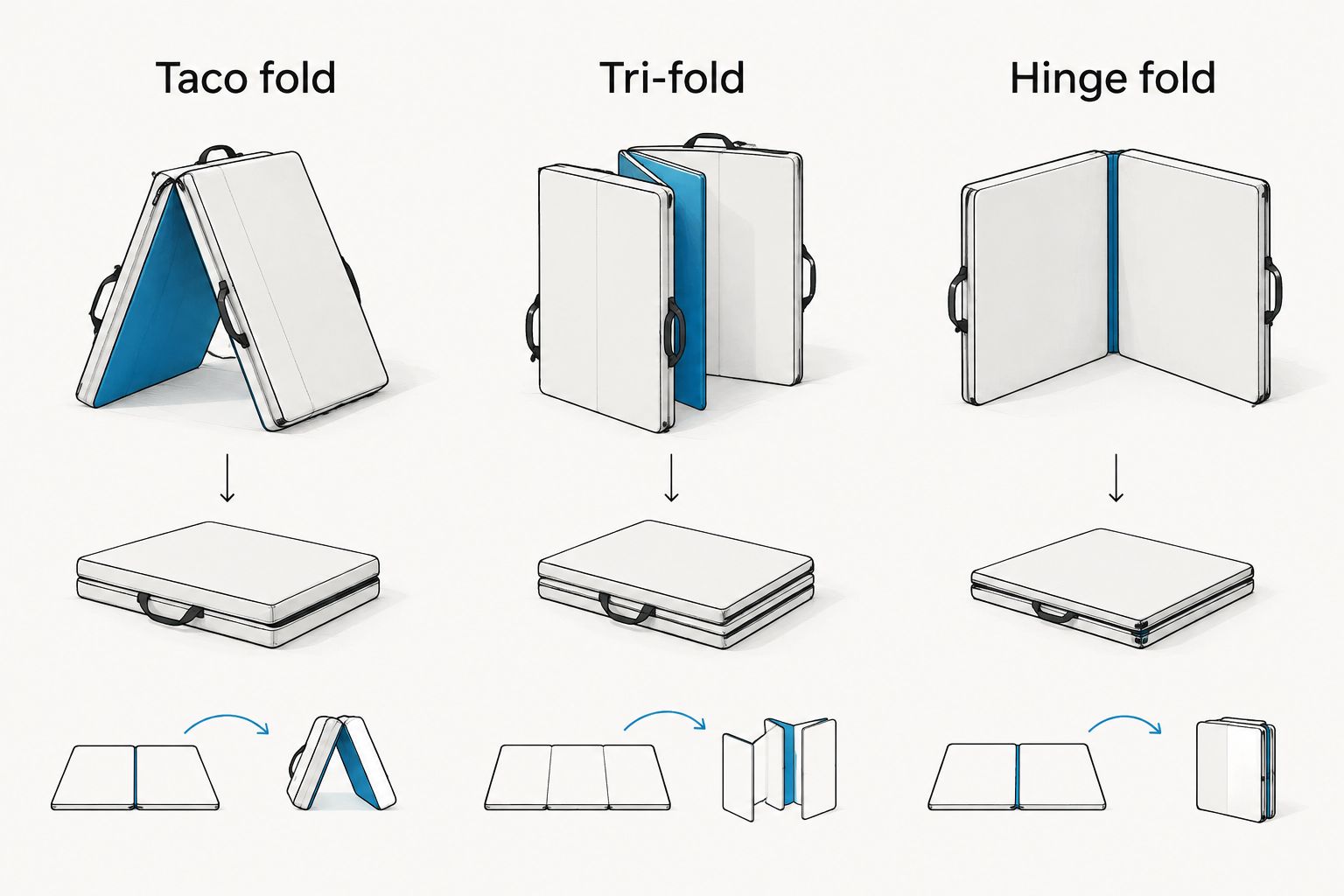
- Fold design — a tri-fold packs flat and covers the hinge gap better than a single taco fold
- Fabric durability — 600D or heavier fabric on the base resists rock abrasion and repeated dragging across gritstone or sandstone
- Value over a season — foam that holds its shape after months of falls beats a cheaper pad you replace within a year
Bouldering pads at a glance
| Pad | Best for | Standout feature | Key limitation |
|---|---|---|---|
| Metolius Session II Crash Pad | Everyday bouldering | Lightweight tri-fold with hybrid foam | Not built for highball falls |
| Snap Hip Crash Pad | Beginners and occasional climbers | 4kg monoblock foam, recycled 600D fabric | Single-density foam, smaller landing zone |
| Slaphappy Urban Bouldering Crash Pad | Travel and urban bouldering | Compact 100 x 120cm, UK-made | Less coverage on spread-out landings |
| Metolius Magnum Crash Pad | Highball and group sessions | 4' x 6' tri-fold, largest coverage in this guide | Bulkier to carry solo |
| Metolius Recon Crash Pad | Road trips and multi-crag days | Lightweight, large tri-fold | Heavier to carry than a session pad |
1. Metolius Session II Crash Pad: best bouldering pad for everyday bouldering
The Metolius Session II Crash Pad is a versatile tri-fold built for climbers who boulder outdoors regularly and want one pad to do most of the work. Hybrid foam construction sits under a durable base fabric, and the tri-fold design closes the hinge gap that single-fold pads leave exposed.
Metolius Session II pros:
- Tri-fold design covers hinge gaps better than a taco-fold pad
- Lightweight enough to carry to multiple problems in one session
- Hybrid foam holds its shape through repeated falls
Metolius Session II cons:
- Landing zone isn't sized for highball problems
- Closed-cell foam, like most pads in this category, firms up on cold days
Best for: climbers bouldering outdoors regularly who need one pad that covers most sessions.
Verdict: Buy. This is the default bouldering pad recommendation for 2026 unless you specifically need highball coverage or maximum portability.
2. Snap Hip Crash Pad: best budget bouldering pad for beginners
The Snap Hip Crash Pad is a 120 x 100cm monoblock foam pad built for climbers starting out or boulderers who only get out occasionally. Recycled 600D fabric covers the base and folds, and the whole pad weighs around 4kg, light enough to sling on your back for a short approach.

Snap Hip pros:
- 4kg weight keeps it easy to carry on foot
- Recycled 600D fabric resists gym and crag wear
- Simple monoblock foam keeps the price accessible
Snap Hip cons:
- Single-density foam feels firmer on higher falls than a dual-layer pad
- 120 x 100cm coverage won't handle an awkward highball landing
Climbers who want a slightly softer landing feel at a similar weight should compare the dual-layer foam Snap Hop Crash Pad, which shares the same 120 x 100cm footprint and 4kg weight.
Best for: beginners and climbers who boulder occasionally rather than every week.
Verdict: Buy for a first bouldering pad in 2026, upgrade once you're projecting taller problems.
3. Slaphappy Urban Bouldering Crash Pad: best bouldering pad for travel
The Slaphappy Urban Bouldering Crash Pad is a UK-made, 100 x 120cm pad built to fold small enough for public transport or a small boot. It's the most compact travel footprint in this guide without dropping to entry-level foam.
Slaphappy Urban pros:
- 100 x 120cm folded size fits public transport and small cars
- UK-made construction with premium foam despite the compact size
- Travel-ready fold holds its shape session after session
Slaphappy Urban cons:
- Smaller footprint means less coverage on spread-out landings
- Not the right pad for highball problems or group sessions
Best for: climbers who commute to the crag without a car or travel between bouldering venues by train.
Verdict: Buy if portability matters more than maximum coverage.
4. Metolius Magnum Crash Pad: best bouldering pad for highball problems
The Metolius Magnum Crash Pad is an oversized 4' x 6' tri-fold built to give the widest single-pad landing zone in this guide. The tri-fold layout keeps the hinge gap away from the most likely landing area, which matters when a fall could land anywhere across a wide base.
Metolius Magnum pros:
- 4' x 6' tri-fold gives the largest landing coverage in this guide
- Tri-fold design closes gaps under the hinge better than smaller pads
- Doubles as a shared pad for group bouldering sessions
Metolius Magnum cons:
- Bulkier to carry solo over a long approach
- Overkill for gym-adjacent sessions where a smaller pad packs down faster
Best for: climbers projecting highball problems, or groups who can split the carry between sessions.
Verdict: Buy for highball projects and group days in 2026; skip it if you mostly boulder alone at short-approach venues.
5. Metolius Recon Crash Pad: best bouldering pad for road trips
The Metolius Recon Crash Pad is a lightweight, large tri-fold aimed at climbers who move between crags on a bouldering road trip and need one pad to cover several different venues. It sits between the Session II and the Magnum on coverage, without the bulk of the biggest pad in this guide.
Metolius Recon pros:
- Bigger landing zone than the Session II without the bulk of the Magnum
- Tri-fold packs down for car boot storage between venues
- Lightweight enough to move between multiple crags in a day
Metolius Recon cons:
- Costs more than the Session II for the extra coverage
- Still heavier to carry on approach than the Snap Hip
Best for: climbers doing multi-crag bouldering trips who need one pad instead of two.
Verdict: Buy for road trips; hold if you already own a Session II and mostly climb close to home.
How we ranked
Every pad above was compared against the same four criteria: foam construction, landing coverage, weight and fold design, with fabric durability as a tiebreaker. No pad wins on every dimension — the Metolius Session II Crash Pad tops the list because it balances all four better than a specialist pad built for one job.
Whichever bouldering pad you land on, the rest of your kit changes how a session actually goes. A chalk bag that stands up on its own saves you re-chalking mid-problem, and a shoe built for steep, technical movement like the Unparallel TN-Finity matters as much as the pad under your feet when you're deciding whether to commit to a move.


Which bouldering pad should you choose?
For most climbers bouldering outdoors in 2026, the Metolius Session II Crash Pad is the right default — it's light enough to carry every session and covers most landings you'll actually face. Choose the Snap Hip Crash Pad if you're new to bouldering or climb outdoors occasionally rather than weekly.
Pick the Slaphappy Urban Bouldering Crash Pad if you travel to the crag without a car, and reach for the Metolius Magnum Crash Pad the moment you start projecting highball problems or bouldering with a group. The Metolius Recon Crash Pad fills the gap for climbers doing multi-crag road trips who don't want to pack two pads.
FAQ
What's the best bouldering pad for beginners in 2026?
The Snap Hip Crash Pad is the best beginner bouldering pad in 2026 — a 4kg monoblock foam pad with recycled 600D fabric built to keep things simple. It isn't built for highball falls, so climbers projecting taller problems should size up to a larger pad.
Is a tri-fold or taco fold bouldering pad better?
A tri-fold bouldering pad generally covers the hinge gap better than a single taco fold because the fold lines sit away from the most common landing zone. The Metolius Session II Crash Pad and Metolius Magnum Crash Pad both use tri-fold construction for this reason.
How much does a decent bouldering pad weigh?
Portable bouldering pads like the Snap Hip Crash Pad weigh around 4kg, while larger highball pads like the Metolius Magnum Crash Pad weigh considerably more because of the extra foam and fabric needed for a 4' x 6' landing zone. Pick weight based on how far you actually carry the pad to the boulder.
Can one bouldering pad cover a highball problem?
A single large pad like the Metolius Magnum Crash Pad can cover a highball landing solo, but most climbers spot highball problems with two or more pads overlapped to remove gaps. A compact pad like the Slaphappy Urban Bouldering Crash Pad isn't enough on its own for a serious highball fall.
Do I need more than one bouldering pad?
Most boulderers start with one all-round pad, like the Metolius Session II Crash Pad, and add a second once they start projecting highball or committing problems with awkward landings. Two overlapped pads remove the gaps a single pad leaves at the edges.
What size bouldering pad covers most landings?
A 120 x 100cm pad, the size of the Snap Hip Crash Pad, covers most single-move landings under a boulder problem. Spread-out or sloping landings need the wider coverage of a 4' x 6' pad like the Metolius Magnum Crash Pad.
Is the Metolius Magnum Crash Pad worth carrying solo?
The Metolius Magnum Crash Pad is worth the extra bulk if you regularly climb highball problems or boulder in a group that can share the carry. Climbers who mostly boulder solo at gym-adjacent crags get more use out of a lighter pad like the Metolius Session II Crash Pad.
What's the difference between the Snap Hip and Snap Hop crash pads?
The Snap Hip Crash Pad uses monoblock foam while the Snap Hop Crash Pad uses dual-layer foam, and both weigh around 4kg with a 120 x 100cm footprint. Climbers who want a softer landing feel should compare the Snap Hop's dual-layer construction against the Snap Hip's single-density foam.
One last thing
Foam construction changes how a fall actually feels more than surface size does. A smaller pad with dual-layer foam can absorb an awkward landing better than a wider pad built on single-density foam, so if you're choosing between coverage and foam quality on a tight budget in 2026, prioritise foam quality first and add a second pad for coverage later.
Related guides
- Hangboard and finger training for boulderers building power between sessions


