

Best Climbing Rope in 2026: Tendon Master Pro Wins
Climbing ropes sold under one banner cover very different jobs: some absorb lead falls, others just hold a fixed load steady. This guide ranks the climbing rope options at The Escapades by what each one is actually built to do in 2026.
- Tendon Master Pro 8.9mm Triple Rated is the best climbing rope for lead and multi-pitch climbing in 2026.
- Tendon Static 10mm and 10.5mm ropes handle top-rope anchors, hauling, and rope access work, not lead falls.
- DMM Worksafe Plus 11mm static rope is built for industrial rope access crews, not recreational climbing.
- Never lead climb on a static rope - check whether a rope is EN 892 or EN 1891 rated before you buy.
Why this matters
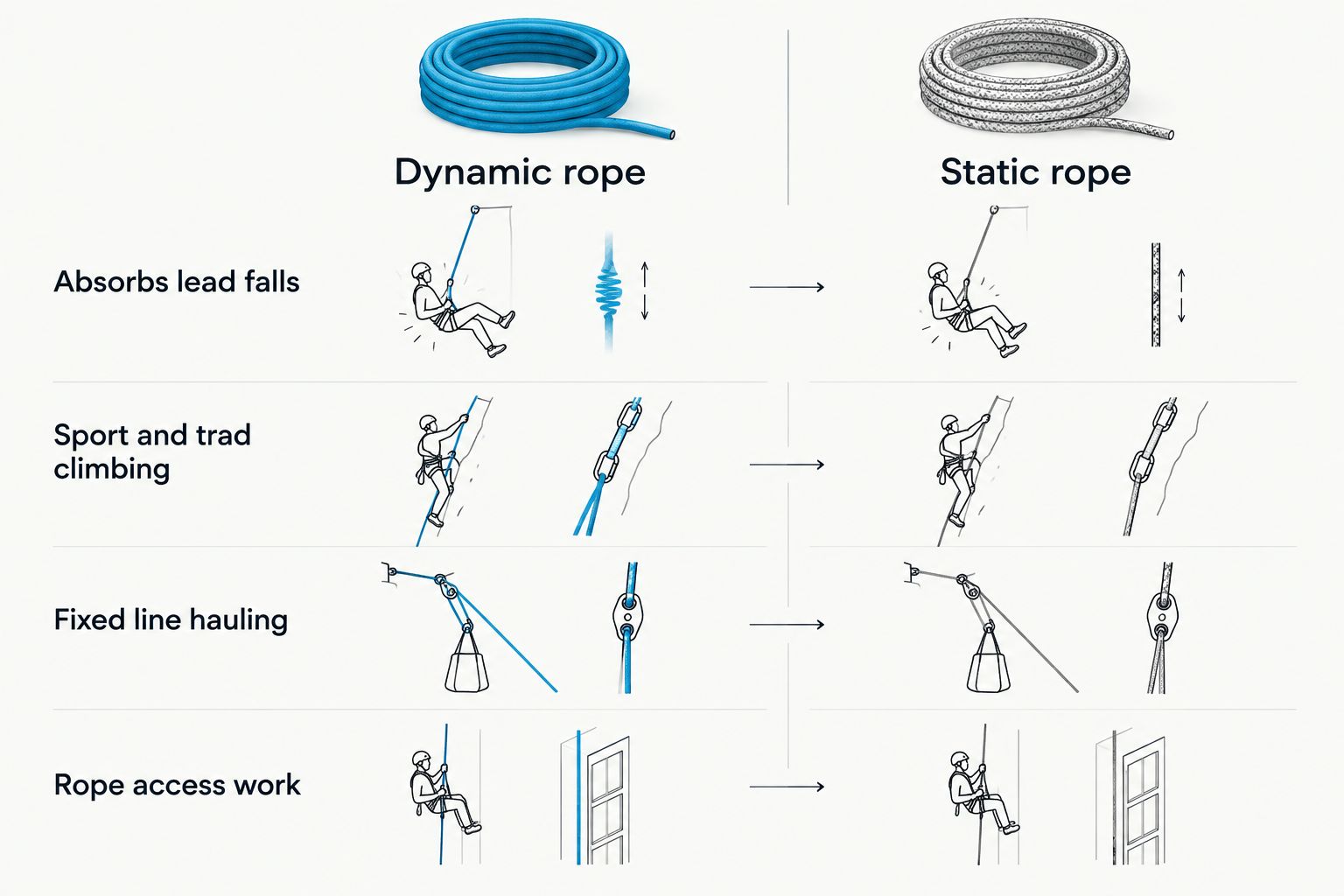
Rope choice decides whether you're climbing safely or just tying two points together with something that happens to be rope-shaped. A dynamic climbing rope stretches under load to soak up the energy of a fall - that's the only type certified for lead climbing under EN 892. A static rope barely stretches, which makes it useless for catching a fall but ideal for hauling gear, rigging a top-rope anchor, or descending a fixed line.
Mixing the two up is the most common and most expensive mistake climbers make when building a rack in 2026. The Escapades stocks both categories, and this guide splits them out honestly instead of lumping every rope sold as a "climbing rope" into one leaderboard.
Best overall: Tendon Master Pro 8.9mm Triple Rated Rope for lead climbing and multi-pitch days. Best for gym top-rope anchors and hauling: Tendon Static 10mm. Best for rope access professionals: Tendon Static 10.5mm and DMM Worksafe Plus 11mm. Best for twin-strand rappel and canyon work: Tendon Static Contra 10.5mm.
What makes the best climbing rope
- Rope type first - dynamic (EN 892) for anything that might catch a fall; static (EN 1891 Type A) for hauling, anchors, and fixed lines
- Diameter - thinner dynamic ropes save weight on long multi-pitch and alpine days; thicker static ropes shrug off repeated abrasion
- Sheath construction - a tighter weave holds up better against edges and friction on ropes that get rappelled or hauled daily
- Certification for your system - single, half, or twin rated for dynamic ropes; Type A static rating for work and rope access
- Strand identification - matters the moment you're running two static lines side by side on a canyon or caving trip
- Length - match the rope to the actual drop or pitch, not the other way round
Best climbing ropes in 2026 - at a glance
| Rope | Best for | Standout feature | Key limitation |
|---|---|---|---|
| Tendon Master Pro 8.9mm Triple Rated | Lead and multi-pitch climbing | Certified for single, half and twin systems | Thin diameter needs a belay device rated for it |
| Tendon Static 10mm | Gym top-rope anchors and gear hauling | Low stretch keeps a hauled load steady | Not certified for lead falls |
| Tendon Static 10.5mm | Repeated abseiling and rope access | Thicker sheath handles daily edge contact | Heavier to carry than the 10mm |
| Tendon Static Contra 10.5mm | Twin-strand rappel and canyon setups | Bi-pattern weave tells strand A from strand B | Same static limits as other Tendon lines |
| DMM Worksafe Plus 11mm | Industrial rope access crews | Tighter woven sheath built for daily hard use | Bulkiest option here, overkill for weekend climbing |
1. Tendon Master Pro 8.9mm Triple Rated Rope: best climbing rope for lead and multi-pitch climbing
Tendon's Master Pro 8.9mm Triple Rated Rope carries certification for single, half, and twin rope systems, so one rope covers sport climbing, a doubled-up trad multi-pitch, or a two-strand alpine belay. That's the kind of flexibility that matters when you don't want three different ropes taking up rack space.
Tendon Master Pro pros:
- Works across single, half, and twin rope systems - one purchase covers most climbing styles
- Thin diameter cuts weight on long approaches and multi-pitch days
- Genuinely useful if you climb sport, trad, and alpine in the same season
Tendon Master Pro cons:
- Needs a belay device rated down to a thin diameter - check your device first
- Thin ropes wear faster on sharp edges than a fat single rope
- Not the right tool for gym-only top-roping, where a fatter single rope lasts longer
Best for: climbers who want one rope for lead, multi-pitch, and alpine days in 2026. Verdict: Buy.

2. Tendon Static 10mm: best climbing rope for gym top-rope anchors and gear hauling
This is a static, low-stretch rope built to EN 1891, not a rope you lead climb on. It's the practical choice for setting a top-rope anchor at the gym or the crag, or hauling a pack up a route while someone else climbs it clean.
Tendon Static 10mm pros:
- Minimal stretch keeps a hauled pack or anchor point steady under load
- Lighter and easier to coil than the thicker static options in this guide
- A sensible pick for anyone setting up fixed top-rope systems regularly
Tendon Static 10mm cons:
- Not rated for lead falls - it has no place on the sharp end, ever
- Thinner sheath wears faster under constant rope-access abrasion than the 10.5mm
- Needs a descender built for static rope, not a standard dynamic belay device
Best for: top-rope anchors, gear hauling, and light fixed-line work. Verdict: Buy for anchors and hauling, skip it for anything involving a fall.
3. Tendon Static 10.5mm: best climbing rope for rope access and repeated abseiling
Same static family as the 10mm, but built thicker for jobs where the sheath takes constant edge contact - repeated abseiling, multi-day fixed lines, or professional rope access work.
Tendon Static 10.5mm pros:
- Extra diameter holds up to daily rappelling better than the thinner 10mm
- Still certified to the same EN 1891 static standard
- Solid choice for anyone running the same fixed line day after day
Tendon Static 10.5mm cons:
- Heavier to carry than the 10mm - noticeable on a long approach
- No substitute for a dynamic rope the moment lead falls enter the picture
- Bulkier to coil and store than the thinner static options
Best for: rope access professionals and repeated abseiling. Verdict: Buy.
4. Tendon Static Contra 10.5mm: best climbing rope for twin-strand rappel and canyon work
The Contra shares its diameter and construction with Tendon's standard static 10.5mm, but uses a bi-pattern weave so two strands running side by side stay visually distinct - useful the moment you're managing two lines at once.
Tendon Static Contra pros:
- Pattern shift removes the guesswork over which strand is which mid-descent
- Same 10.5mm durability as Tendon's standard static rope
- Suits guides running twin-strand systems for groups on canyon or caving trips
Tendon Static Contra cons:
- Overkill if you only ever run a single static line
- The pattern adds nothing if you're climbing solo on one rope
- Still static, so it stays off the lead climbing rack entirely
Best for: canyoning and caving setups running two static strands together. Verdict: Buy for twin-strand work, skip it for single-strand or lead climbing.
5. DMM Worksafe Plus 11mm: best climbing rope for industrial rope access crews
DMM Worksafe Plus pairs an 11mm diameter with a tighter woven sheath, built for crews who work a rope hard every single day rather than climbers heading out at weekends. It's available across a wide range of lengths, from 50m up to 700m, which suits industrial drops far longer than any crag.
DMM Worksafe Plus pros:
- Tighter woven sheath copes with daily abrasion better than a recreational static line
- The 11mm diameter suits winches, rescue systems, and industrial descenders
- Length options from 50m to 700m cover far more than a typical climbing pitch
DMM Worksafe Plus cons:
- Heaviest and bulkiest rope in this guide - unnecessary for a weekend rack
- Static construction rules it out for lead climbing completely
- The extra diameter needs hardware sized for 11mm rope, not standard climbing gear
Best for: industrial rope access and work-at-height crews. Verdict: Buy for professional use, skip it for recreational climbing.
How we ranked these
Each rope earned its slot by matching a real use case, not by generic score. The Tendon Master Pro tops the list because triple-rating genuinely replaces three ropes for most climbers. The static ropes are ranked by diameter and sheath toughness against the job they're actually sold for - hauling, anchors, or repeated abrasion - never against lead-climbing criteria they were never built to meet.
Which climbing rope should you choose?
If you only buy one rope in 2026 and you climb outdoors, get the Tendon Master Pro 8.9mm Triple Rated Rope - it covers sport, trad, and alpine without needing a second purchase. If you're setting up gym or crag top-rope anchors, the Tendon Static 10mm does that job without the extra bulk of a thicker line. Rope access professionals and anyone rappelling the same fixed line daily should look at the Tendon Static 10.5mm or the DMM Worksafe Plus 11mm, and canyon or caving groups running two lines at once want the Tendon Static Contra 10.5mm for the strand identification alone.
FAQ
What's the best climbing rope for lead climbing in 2026?
The Tendon Master Pro 8.9mm Triple Rated Rope is the best pick for lead climbing in 2026 because it's certified for single, half, and twin systems. That covers sport, trad, and alpine climbing without buying separate ropes for each.
Is a static rope safe to lead climb on?
No. Static ropes are built to EN 1891 and barely stretch, so they don't absorb the energy of a fall the way a dynamic EN 892 rope does. Use a static rope for hauling, anchors, or fixed lines, never for lead climbing.
What rope diameter do I need for sport and trad climbing?
A triple-rated dynamic rope around 8.9mm, like the Tendon Master Pro, covers most sport and trad climbing while keeping pack weight down on multi-pitch days. Check your belay device is rated for that diameter first.
What does triple-rated mean on a climbing rope?
A triple-rated rope has passed EN 892 testing for use as a single, half, or twin rope system. It means one rope can do the job of three, which suits climbers who move between sport, trad, and alpine routes.
Can I use a static rope for top-roping?
Yes, for the anchor and haul line, not for the climber's fall protection. A static rope like the Tendon Static 10mm holds a top-rope anchor steady thanks to minimal stretch, but the climbing side of the system still needs a dynamic rope.
How do I tell two static ropes apart on a rappel?
Use a bi-pattern rope like the Tendon Static Contra 10.5mm, which shifts its weave pattern so each strand looks visually distinct. That removes the guesswork when running two static lines side by side on a canyon or caving descent.
What's the difference between EN 892 and EN 1891 ropes?
EN 892 covers dynamic climbing ropes designed to stretch and absorb a fall. EN 1891 covers static Type A ropes built for rope access, hauling, and fixed lines, with almost no stretch and no fall-absorption rating.
How often should a climbing rope be retired?
There's no fixed calendar age - retire a rope after a hard fall, visible sheath damage, or heavy fraying regardless of when you bought it. A rope used every week for climbing wears out well inside a year even without obvious damage.
One last thing
The detail climbers miss most often in 2026 isn't diameter or brand, it's certification standard. A static rope and a dynamic rope can look nearly identical coiled on a shop shelf, and the only real difference - EN 892 versus EN 1891 - decides whether it catches you or lets you hit the ground. Check the tag before you check the price.


